Why Designers and Architects Need AI 3D Visualization Tools (or Risk Being Left Behind)
TL;DR
If you’re still relying solely on 2D floor plans and mood boards, there’s a real risk your clients don’t fully understand—or trust—your vision. AI 3D visualization turns your designs into clear, immersive experiences, making clients confident in your work. In today’s design world, these tools aren’t a technical upgrade—they’re the difference between clarity and confusion, and ultimately, between landing the project or being overlooked.
Seeing Is Believing: Why Visualization Matters Now More Than Ever
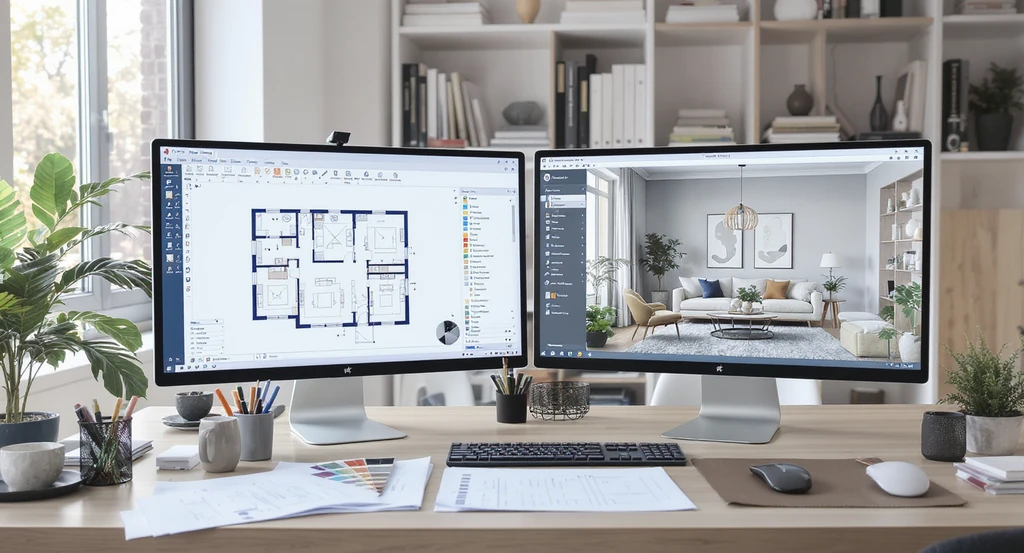
Professional design studio showing 2D blueprints and AI 3D home renovation visualizations—essential tools for architects working with clients who can't picture spaces or have aphantasia.
Home design isn’t just about having great taste or creative ideas. It’s about helping clients see what their future space will actually look and feel like. But here’s the truth: most people struggle to picture changes based on blueprints or 2D sketches. This gap between a designer’s vision and a client’s imagination often leads to worry, indecision, or costly miscommunication. If you’re unsure how to bridge this divide, the straightforward answer is: use AI-powered 3D visualization. These tools remove the guesswork, letting clients step inside the design—before any money or time is spent. With just a few clicks, you can show them options, update details, and build trust instantly. This is the new standard.
-
Why 2D Designs Fall Short
Think about the last time you handed a client a set of 2D plans or mood boards. Odds are, they smiled politely and nodded—but inside, they were still guessing about how everything would feel. Most people don’t instinctively read floor plans or imagine a full, finished room from flat sketches. That’s why the classic way of handling these meetings usually means extra explanations, revisions, and sometimes, expensive mistakes. It’s not that clients don’t care or aren’t smart. It’s that translating technical drawings into a real-world vision isn’t natural for most of us. As discussed in our overview of virtual interior design, tools that create an actual sense of space outperform anything that leaves clients guessing.
-
The Power of Showing, Not Just Telling

How to visualize home renovations with AI: Tools like 3D visualization let clients who can't picture spaces, including those with aphantasia, see design ideas clearly before any changes are made.
AI 3D visualization changes the experience from guessing to believing. Instead of saying, “Imagine the sofa here,” you show the sofa there—right in their actual room, with their lighting, color, and proportions. For clients who struggle with aphantasia (trouble picturing images in the mind), these tools are game-changers. According to a study cited often in design circles, people process visuals tens of thousands of times faster than text—a fact that explains why clients respond so emotionally to a realistic render. You’re not just communicating design; you’re giving your client a chance to feel at home before the build even begins.
-
Trust, Confidence, and Fewer Surprises
Every project has a trust gap: that uneasy space between approving a design and seeing it become reality. Traditionally, this gap is filled with worries—will the colors match, will the sofa fit, what if the lighting is off? With AI visualization, you eliminate almost all guesswork. Clients see accurate, photo-real versions of their space; they understand exactly what’s coming, which means fewer change orders, delays, and stressful conversations. As we explored in our deep dive on AI’s essential role in design, this new clarity is becoming an absolute expectation for any serious project.
-
Responsiveness: How AI Enables Real Collaboration
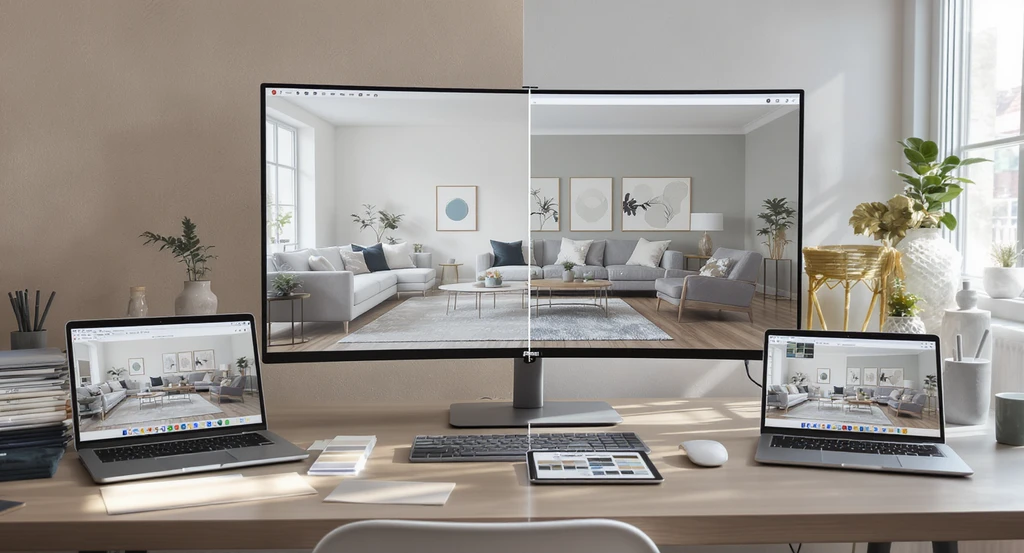
Modern workspaces using AI 3D visualization tools demonstrate how to visualize home renovations with AI, enabling clients who can't picture spaces to see instant design changes.
In the fast-moving world of design, clients want to try ideas and see changes quickly. You don’t want to look unresponsive or slow because every iteration takes days to model and refine. With AI, you can update colors, rearrange furniture, or swap finishes in minutes—not hours or days. This kind of speed doesn’t just save time; it shows clients you’re listening, that you care about their feedback, and that you’re committed to getting things right for them. This technical advantage reflects genuine empathy and client focus. The conversation changes: instead of translating blueprints, you’re co-creating their home, together.
-
Professionalism: Why Your Tools Matter
Clients notice when you’re using the latest technology. Hand-drawn sketches and basic models seem outdated in a world where photorealistic 3D is common. Using an AI-powered visualization tool signals that you’re current, detail-oriented, and dedicated to their satisfaction. It’s not just about design talent—it's about how that talent is communicated. As we covered in our review of the best AI interior design tools, the right platforms now make these advanced presentations easy, even if you have no technical background.
-
Why This Shift Is Inevitable
Clients today are exposed to hyper-real digital experiences everywhere—they expect to see believable previews before committing. In design, this means 3D visualization is not a nice-to-have, but a must-have. Designers and architects who stick to 2D approaches (even with a great portfolio) will seem outdated. The farther AI visualization advances, the clearer this new line in the sand becomes. According to our breakdown of AI’s transformative trends in design, AI is fundamentally reshaping how spaces are sold and experienced.
-
How to Decide on the Right Tools
If you’re feeling overwhelmed by all the AI and visualization options, here’s a simple way to approach it:
- If your clients often ask for more details or seem unsure: move to 3D visualization early—it helps them understand the space faster.
- If budgets are tight and you want to avoid costly mistakes: visualize key decisions upfront before committing.
- If clients struggle to picture spaces (including those with aphantasia): use tools that offer clear, realistic 3D views or walkthroughs.
- If speed and collaboration matter: choose AI tools that make it easy to test layouts, swap elements, and share options quickly.
For a side-by-side comparison, see our guide to the top AI design solutions.
-
Real-World Uses: More Than Just Pretty Pictures

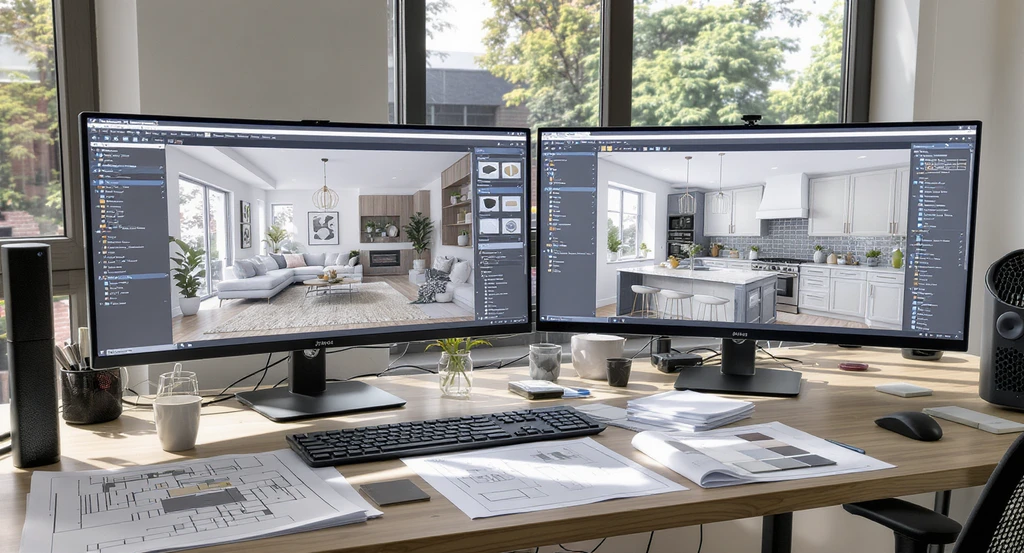
Kitchen showroom uses the best AI 3D visualization tools to help clients who can’t picture spaces, demonstrating how to visualize home renovations with AI and select materials before installation.
AI-powered visualization isn’t limited to interior design. Architects use it to help clients understand flow, light, and structure; kitchen showrooms and cabinetry workshops (like those at luxury firms) use it to confirm material choices, hardware, and spatial relationships before installation—avoiding costly mistakes and misunderstandings. Tools are invaluable for builders, stagers, and even homeowners navigating a complex remodel. Learn more about how virtual designing can elevate your project outcomes.
Frequently Asked Questions
Absolutely. Many clients (including those with aphantasia) need to see spaces to understand them. 3D tools transform abstract ideas into tangible previews, making decisions much easier.
2. Is 3D visualization expensive or hard to learn?
Most modern AI tools are designed for ease and affordability. You don’t need a technical background—just your design vision.
3. What’s the difference between traditional renderings and AI visualization?
AI tools automate much of the process, deliver photoreal precision fast, and make updating details quick. This supports real-world design flexibility and client collaboration.
4. How does this technology help avoid mistakes?
By letting you (and your clients) preview every detail before final decisions, you minimize surprises, costly last-minute changes, and requests for revisions.
5. What’s the best way to try AI visualization for myself or my clients?
Start with a free trial on a platform focused on interior design and architecture. Look for the ability to upload plans, make quick changes, and preview spaces in photoreal quality.
The Bottom Line: Don’t Get Left Behind
AI 3D visualization tools are now a basic requirement for serious designers and architects. They make communicating your ideas effortless, help clients picture the finished result, and cut down on misunderstandings, delays, and costly changes. The question is not whether you can get by without them—but how much business and client trust you’ll lose if you try. By making your process clearer and more collaborative, you’re not just keeping up—you’re staying ahead.