How Much Should You Spend on Dorm Shopping?
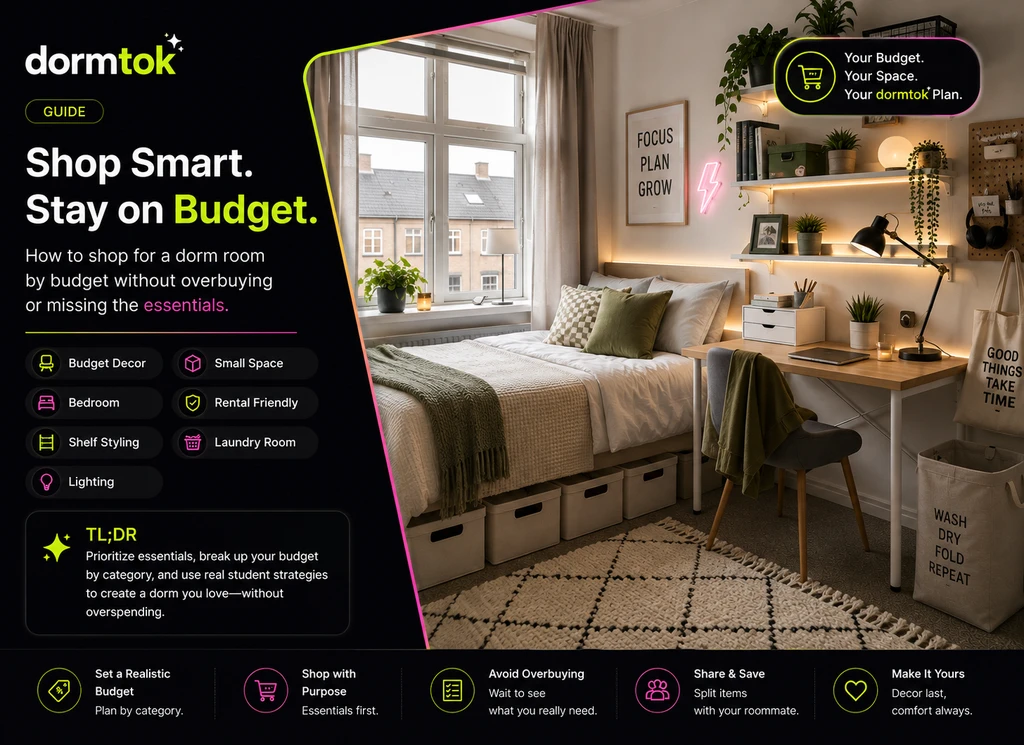
TL;DR
Dorm shopping is all about prioritizing needs, not just chasing TikTok trends. Start with essentials, break up your budget by category, and use real student strategies (and tools like dormtok) to plan a smart, comfortable dorm move-in without overstuffing your space or draining your wallet.
-
1. The Dorm Budget Dilemma: Is $1,000 Normal?

A minimalist dorm room setup shows how to budget for dorm essentials, avoid overspending on college decor, and minimize move-in waste.
You’ve watched the YouTube hauls, stalked Pinterest, and now your Amazon cart has hit $1,102. It’s a gut-punch number, especially when you’re a first-gen student navigating move-in solo.
Breathe. You’re not the only one whose shopping list snowballed. As we explored in our college dorm checklist guide, those endless lists can make anyone feel like everything is a “must-have.” But the truth is, most students spend between $400 and $1,000, and your real needs are much smaller than any algorithm suggests.
-
2. Where to Actually Find Budget-Friendly Dorm Products
Here’s the reality check the internet skips: There are smart ways to shop at every price point, and not everything has to be new or expensive. Learning where to save and where to splurge is key.
- Ultra-Budget ($1–$10): Local dollar stores, chain discounters, and thrift shops are great for shower caddies, cleaning supplies, desk organizers, plates, and mugs.
- Mid-Budget ($10–$30): Walmart and Target offer affordable bedding bundles, basic organizers, study lamps, and other dorm essentials.
- Upgrade/Splurge ($30+): Spend more only when it improves comfort or quality, such as with a mattress topper, better pillows, noise-canceling earbuds, or a school-approved appliance.
According to our advice on budget dorm shopping, splitting big items with your roommate and checking out secondhand options (think Facebook Marketplace, dorm buy/sell groups, or graduating seniors) can make a massive difference.
-
3. Stop, Don’t Buy All Your Dorm Stuff at Once
You’ll see viral room reveals with layered rugs and coffee stations, but, plot twist, your actual dorm is likely smaller and more restrictive than you expect. School furniture stays, Twin XL is (sadly) standard, and you can’t paint or drill.
That’s why the smartest move is starting with sleep, hygiene, and storage basics. Essentials first: bedding, towels, laundry bag, shower caddy, storage bins. Then, only after move-in and a week of living there, figure out if you truly need that extra shelf or cute rug. As we break down in our budget setup guide, most things can (and should) wait until you know your real dorm routines and dimensions.
-
4. How to Divide Your Dorm Budget And Save Your Sanity

Learn strategic ways to avoid overspending on college decor with frugal strategies for first generation college students. This organized dorm room illustrates how to budget for dorm essentials and minimize move-in waste.
Dividing your budget into categories makes it less overwhelming and helps you avoid overspending on one area. Think about:
- Bedding ($80–$150): Splurge here for comfort. Prioritize sheets, a mattress protector, and pillows.
- Storage & Organization ($40–$100): Focus on practical pieces like plastic drawers, under-bed bins, and hangers.
- Bath & Laundry ($55–$110): Budget for towels, toiletries, a laundry bag, and detergent.
- School Supplies ($50–$150): Only buy what you’ll actually need and use for your classes.
- Cleaning Supplies ($20–$40): Dollar stores can be a great place to find affordable cleaning essentials.
- Décor ($30–$100): Add personal touches to make your dorm feel like yours, but prioritize essentials first.
Want more details? Our dorm essentials checklist lays out what to pack now, and what can absolutely wait.
-
5. Second hand, Shared, and DIY: The Real Budget Hacks
Many students in r/college, r/Frugal, and beyond credit two key moves for stretching a tight budget: buy secondhand (for big items, storage, even decor) and coordinate with your roommate before buying anything communal. And never underestimate the power of borrowing, thrifting, or using what you already have at home.
Your school may even provide lists of what’s included in your dorm, use that as a guide to cut down on double purchases. As we explored in our budget shopping tips, waiting to see your actual room will prevent regret purchases and save serious cash.
Dorm Budget FAQ: Your Questions Answered
Most students spend between $400 and $1,000, depending on what they already have and how much they want to upgrade. Start with essentials, then add decor once you know your space.
Where can I find budget-friendly dorm essentials?
Dollar stores, Walmart, Target, Amazon, local thrift shops, and Facebook Marketplace all offer budget-friendly basics. Shop by need, not just by store.
Should I buy everything before move-in?
No—the smartest move is to bring what you know you’ll use right away and wait on anything size-dependent or aesthetic. Let your actual dorm routine shape the rest.
What items should I split with my roommate?
Big-ticket or shared-use items like a mini fridge, microwave, rug, or extra seating are all good to coordinate and split costs with your roommate.
How can I avoid overbuying or forgetting something important?
Start with a checklist, divide your budget by category, and keep a move-in buffer for late discoveries.
The DormTok Takeaway: Plan Your Space, Own Your Budget
You don’t need to drop $1,000+ to make your dorm feel like home. A comfortable, functional, and personal space comes from smart priorities, a budget broken down by category, and the patience to wait on decor until you know what fits. dormtok lets you upload your real dorm photo, pick your vibe, and get style and product ideas that actually match your space and budget, no more guessing, no more cart regret. It’s the simplest way to turn inspiration into a real plan so you feel ready, not overwhelmed, come move-in day.