The Future of Virtual Staging in 2026 and Beyond
TL;DR
Virtual staging in 2026 increasingly combines AI visualization, realistic room layouts, and interactive personalization to help buyers understand spaces more naturally. Rather than simply adding digital furniture, future staging systems increasingly support lifestyle visualization and decision-making.
Understanding the Evolution of Virtual Staging
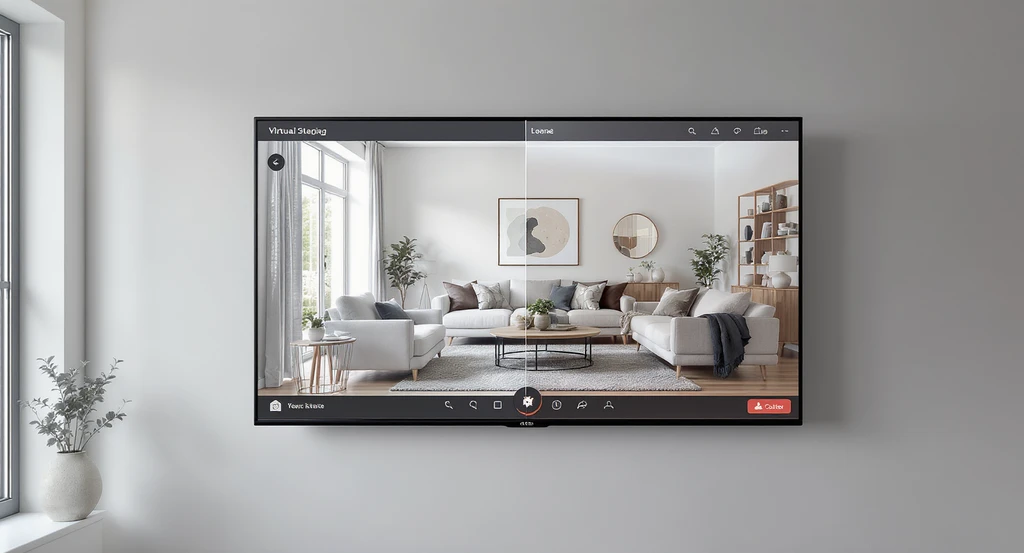
Advanced AI virtual staging in a high-tech real estate space demonstrates future trends in ai home design visualization and interactive virtual staging, helping buyers trust AI-powered design solutions while previewing customized room styles.
Virtual staging began as a solution for helping buyers visualize empty spaces. Early digital tools added furniture images to photos, making it easier to understand room size and function. However, buyers and real estate professionals now expect more than static visual upgrades.
In 2026, virtual staging focuses on interactive and intelligent visualization. Buyers want to see spaces in their own style, understand actual layouts, and preview how they might really live there. This shift redefines both real estate marketing and the interior design process.
-
From Image Editing to Experiential Visualization
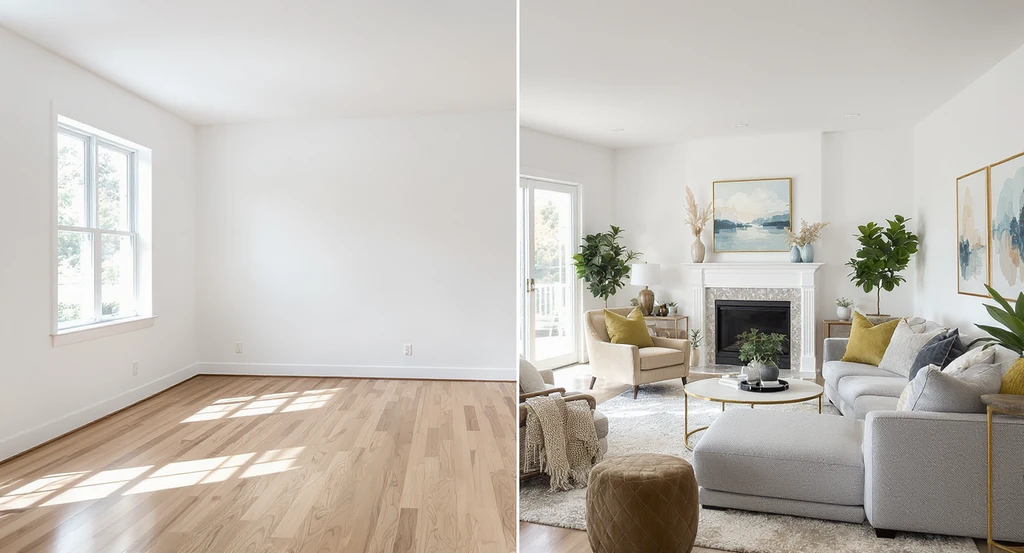
A side-by-side comparison of an empty room and one virtually staged with personalized AI-designed décor demonstrates the leap from generic image editing to immersive, lifestyle-focused ai home design visualization in real estate.
Traditional virtual staging solved a practical problem, empty rooms left too much to the imagination. Early tools mostly placed generic furniture into listing images. Today, the expectation is for personalized, immersive visualization.
Instead of wondering, “Can this room be staged?” buyers increasingly ask, “Can I see this room as I’d want to live in it?” This change moves staging away from simple decoration and toward supporting individual lifestyles, as noted in our exploration of lifestyle-based design trends.
Expert Insight
A seller once tried impressing buyers by staging a luxury unit with dramatic, oversized furniture. While the images attracted attention online, visitors found the setup hard to relate to their daily lives. After switching to a softer layout and realistic proportions, buyers engaged more, because the space finally felt liveable rather than staged.
-
Key Trends Driving Virtual Staging Acceleration
Virtual staging adoption is growing due to several industry shifts:
- Many home-buying journeys now begin with digital listing experiences, increasing the importance of visual presentation and first impressions.
- Buyers often form early impressions rapidly while browsing listing imagery, increasing the importance of visual clarity and realism.
- High-quality visualization builds trust
- Customization expectations are rising
- Speed in preparing listings is essential
As buyers scroll, rooms need to feel welcoming, proportioned, and realistic from the very first impression. This demand for greater clarity underpins what we call the Visualization Expectation Shift, As AI-generated interiors become more common, realistic scale and architectural consistency may increasingly act as trust signals during property evaluation, helping buyers picture their future in a space, not just see it as a blank canvas. Our guide for real estate agents highlights why transparency and realism now matter more than ever in listings.
-
The Four Stages of Virtual Staging Development
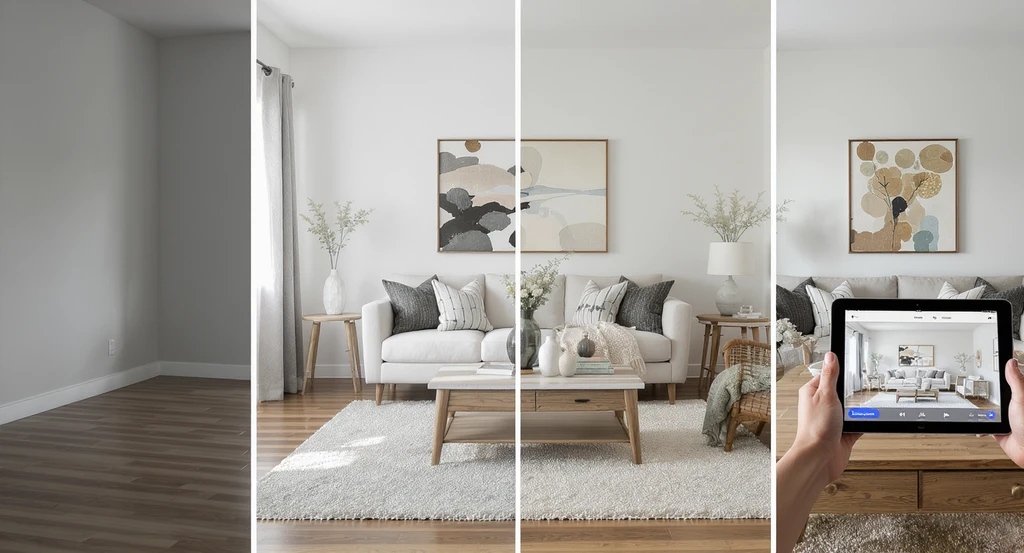
The four stages of future trends in AI virtual staging, from empty room enhancement through personalized AI home design visualization to fully interactive real estate staging tools that improve buyer trust and avoid common mistakes in ai home staging.
- Empty Room Enhancement: Simple digital furniture insertion to help define space.
- Style-Driven Staging: Standard decor variations (e.g., modern, coastal, farmhouse).
- Intelligent Personalization: Customizing layouts and style based on buyer preference.
- Interactive Visualization Ecosystems: Real-time layout editing, lighting changes, furniture swaps, and lifestyle scenes.
Virtual staging is now a decision-support system, not just an image editor. For more on tailoring DIY virtual staging tools to your workflow.
-
Why Hyper-Realism and Visual Trust Now Matter Most

Ultra-realistic AI virtual staging sets new visual trust standards in real estate—correct furniture scale, natural lighting, and true-to-life textures address common mistakes in ai home staging and align with future trends in personalized ai home design visualization.
As AI-generated content becomes mainstream, the quality standard is shifting to believability. Outdated staging methods often suffered from floating furniture, poor scale, odd shadows, and generic materials.
- Correct furniture proportions
- Accurate lighting and natural shadows
- Architectural realism
- Material and texture fidelity
Visual trust is now central to buyer confidence. According to our guide on advanced virtual staging and 3D tours, realistic, consistent environments help listings stand out.
-
Lifestyle Visualization Over Decorative Staging
The focus is moving from filling rooms with attractive furniture to creating scenarios that match buyer routines. Visualization now demonstrates how a room functions as a home office, wellness retreat, or family space, not just as a generic living room.
This approach, supported by lifestyle-based staging principles, increases emotional clarity and helps buyers imagine themselves living in the property.
Future staging systems may increasingly adapt rooms around routines and use cases rather than predefined room labels, creating more context-aware visual experiences. -
Interactive and Personalized Buyer Experiences
Listings are evolving from static images to interactive platforms. Buyers now expect to preview multiple styles, Soft Modern, Modern Organic, Contemporary, or Quiet Luxury, and explore variations before making decisions.
This flexibility reduces doubt and supports faster, more confident choices. Homeowners and agents benefit from having several design options to present and iterate on instantly, a process enabled by AI-based platforms such as REimagineHome AI.
-
The Role of Buyer Psychology in Virtual Staging
Most buyers first react to a listing emotionally, then analyze details. Spaces described as welcoming, premium, or calming get more attention.
Natural lighting, material realism, and balanced layouts help reduce visual friction and heighten comfort. Industry observations increasingly suggest that practical, comfortable, and realistic rooms may create stronger emotional engagement during listing evaluation, as discussed in our overview of AI staging lessons for agents.
-
AI as a Design Partner, Not a Replacement
There is concern that AI might replace home stagers and designers. In reality, AI primarily accelerates design choices and experimentation. Key questions, What scale works? Which layout improves flow? What palette suits the architecture? still require professional judgment.
AI systems support spatial reasoning and trial layouts but rely on human expertise for emotional context and nuanced corrections. The future likely sees closer collaboration rather than automation. For details on balancing tools and human input, read our guide for DIY staging decisions.
-
How Visualization Tools Reduce Uncertainty
AI-powered platforms like REimagineHome AI enable users to preview furniture layouts, staging styles, and functional room alternatives instantly.
This reduces the guesswork and gives buyers tangible references for decision-making, improving both trust and speed during the home search and design process. Instead of cycling through endless redesigns, issues with scale, flow, or style can be tested visually in advance.
-
Persistent Mistakes: What Still Goes Wrong
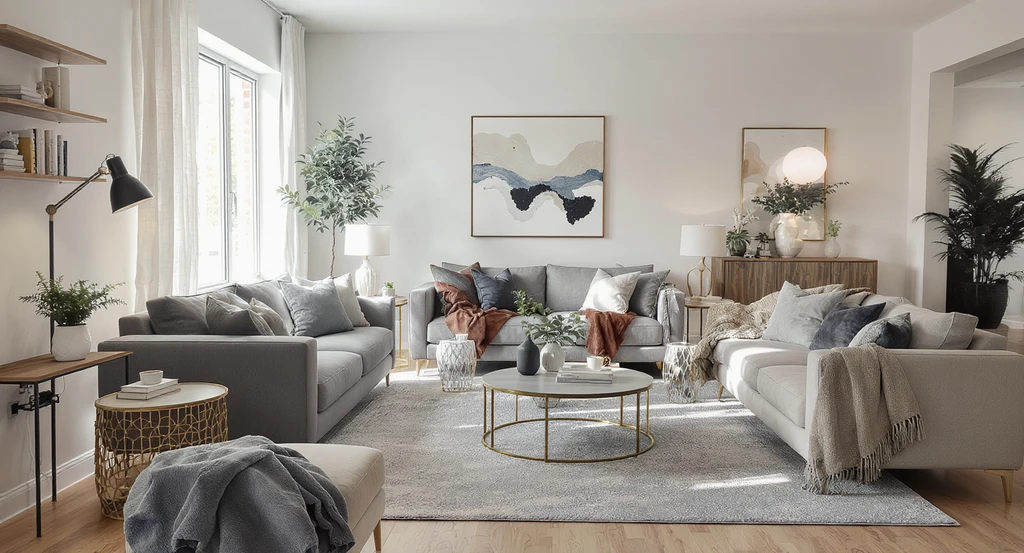
Common mistakes in AI virtual staging, such as overdecorating, poor furniture scale, and unrealistic lighting, undermine interactive virtual staging for real estate and highlight why future trends prioritize buyer trust and personalization.
Despite technical advancements, several mistakes commonly reduce staging impact:
- Overdecorating or crowding rooms
- Ignoring how scale impacts usability
- Unrealistic lighting and reflections
- Layouts that don’t match lifestyle needs
- Prioritizing trends at the expense of function
Visual realism and layout logic are essential for building buyer trust and enhancing listing performance, as noted in our lessons for professionals.
Future visualization systems may increasingly combine room dimensions, property context, buyer preferences, and design behavior patterns to suggest layouts automatically. Rather than manually selecting furniture, users may receive recommendations optimized around comfort, flow, and functionality.
Visualization Scenario
Imagine uploading a photo of any empty room and immediately previewing several styles, Modern Organic for families, Quiet Luxury for entertaining, or a wellness-inspired work-from-home setup. Instantly adjust lighting, layout, and color, narrowing choices until the space matches your needs and taste. This is the new standard for virtual staging.
Frequently Asked Questions
- What will virtual staging look like beyond 2026?
- It will become more interactive and realistic, letting buyers instantly preview multiple layouts, styles, and room uses. Expect real-time editing and deeper personalization.
- Why does realism matter so much for staging now?
- Realistic staging increases trust. Correct proportions, lighting, and layouts help buyers imagine living in a property, making listings more credible and appealing.
- What makes virtual staging feel realistic to buyers?
- Realism often depends on correct furniture proportions, natural lighting, believable materials, and layouts that support everyday use. Buyers tend to respond more positively to spaces that feel practical and authentic.
- Will AI replace staging professionals?
- No. AI speeds up visualization and experimentation, but designers are still needed for taste, context, and emotional balance in layouts.
- How does AI help avoid staging mistakes?
- AI lets users test furniture scale, layouts, and style combinations visually before committing—so common mistakes become easier to detect and correct in advance.
Why the Next Wave of Virtual Staging Is Experience-Driven
Virtual staging is shifting from static design overlays toward immersive, customizable, and decision-focused experiences. Real estate marketing and interior design will increasingly rely on tools that balance realism, personalization, and easy visualization.
As buyers expect warmer, more believable interiors, the ability to preview and adapt spaces in real time will be central to both buyer trust and better design decisions. The future belongs to visualization ecosystems that go beyond images to deliver true engagement.