Why Does Your Living Room Feel Cold Even With Warm Colors?
TL;DR
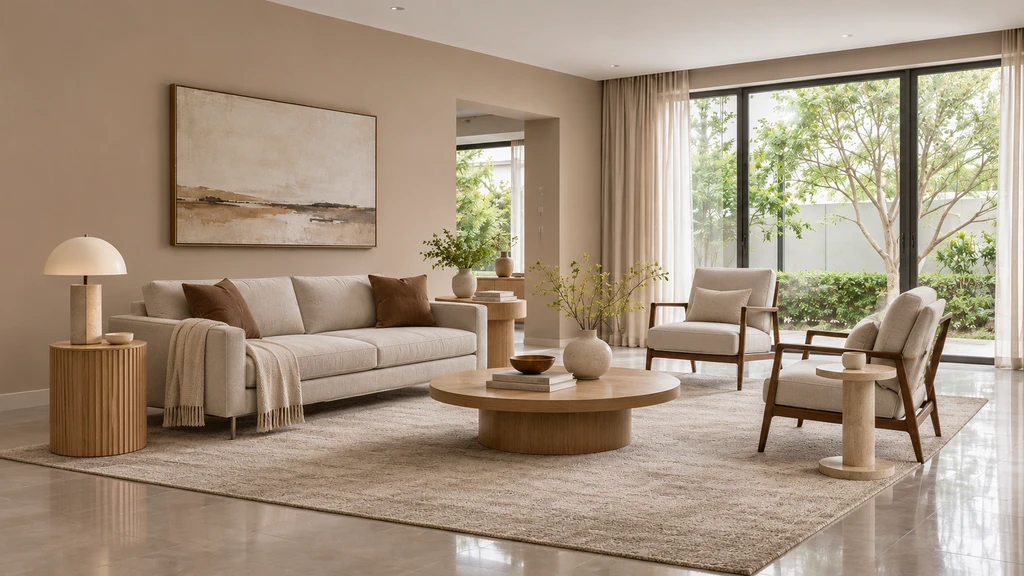
A living room can feel cold despite warm colors because lighting, texture, furniture placement, and room proportions influence how welcoming it appears. Beige walls and brown furniture cannot compensate for harsh lighting, hard surfaces, or disconnected seating. Before repainting, use the Four-Part Warmth Test to identify the problem, then try one targeted change. A different lighting arrangement, textured rug, or better seating layout may be enough.
-
1. Why Warm Colors Alone Don't Guarantee a Cozy Living Room
Warm colors don't automatically make a living room inviting. Beige walls, glossy floors, harsh lighting, and widely spaced furniture can feel less welcoming than a cool-colored room with soft textures and balanced lighting.
Color warmth refers to hues, while visual warmth comes from lighting, materials, proportions, and furniture arrangement. Before repainting, identify what's making the room feel cold. Explore more transformative room fixes.
-
2. The Four-Part Living Room Warmth Test
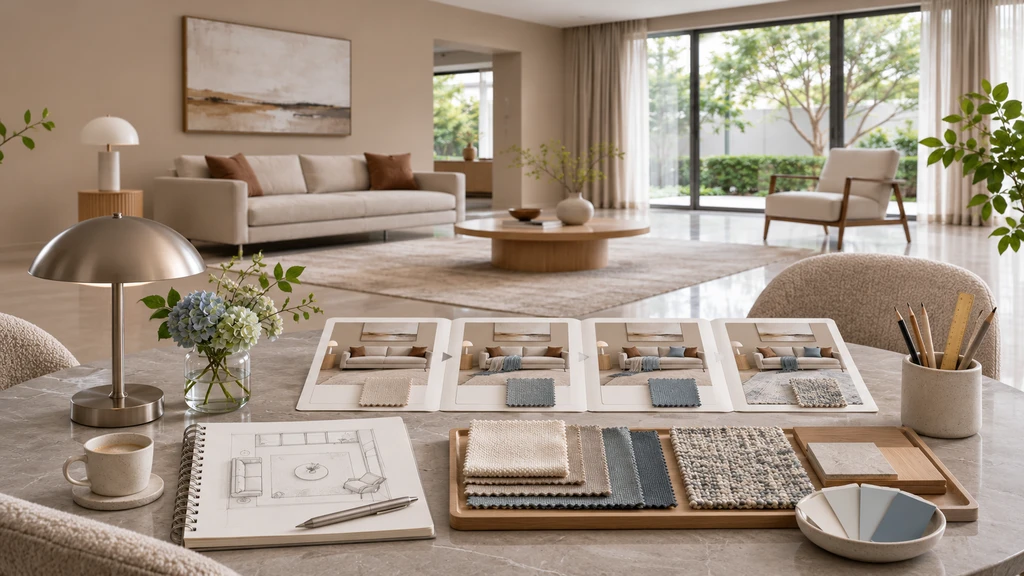
Test one change at a time by comparing textures, colors, lighting, and furniture arrangement against the same room. Keeping the base space consistent makes it easier to identify which adjustment actually improves visual warmth.
Before adding more warm-colored accessories, check four elements that influence how your living room feels. This helps identify whether the issue is visual or related to actual room temperature.
Element What to Check First Adjustment to Test Lighting Does the room feel harsh or flat after sunset? Adjust brightness and light placement Texture Are major surfaces smooth, glossy, or bare? Add a substantial textured material Layout Does seating feel scattered or disconnected? Try a closer furniture grouping Physical Comfort Does the room actually feel chilly? Check drafts, windows, and heating Key takeaway: Fix the cause, not the color. If the room is physically cold, address heating or insulation. For visual issues, explore these living room solutions.
-
3. How Lighting Influences Visual Warmth
Lighting affects how colors and materials appear. Harsh overhead lighting can make warm interiors look flat. For a softer evening atmosphere, try warm-white bulbs (2700K–3000K), while considering brightness, glare, and light distribution.
Lighting Type Purpose Living Room Example Ambient General illumination Dimmable ceiling lighting Task Supports activities Floor lamp beside a reading chair Accent Adds visual depth Table lamp or artwork lighting Try this: Compare your room during daylight and after dark. If it feels less inviting at night, adjust brightness or add a shaded lamp before repainting. Avoid overly yellow lighting that distorts colors.
-
4. Material Contrast and Texture: The Hidden Warmth Factor
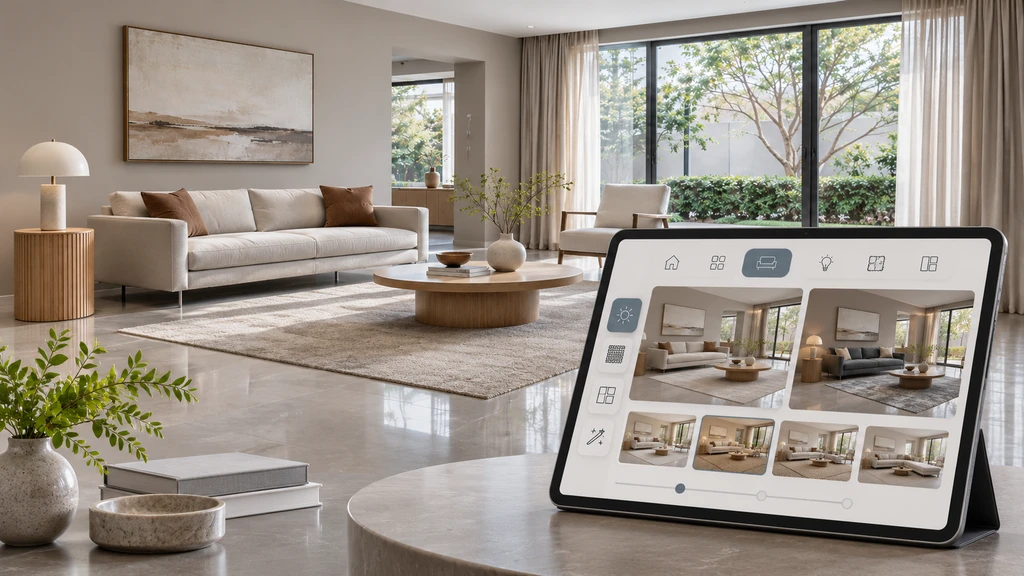
Preview different lighting, material, and layout adjustments while keeping the same room architecture and core furniture. Comparing controlled variations makes it easier to see which change improves the room before repainting or buying new décor.
Warm-colored rooms can still feel visually cold when most surfaces are smooth, glossy, or reflective. Beige walls, polished floors, leather seating, and glass furniture may lack the texture needed for a softer atmosphere.
Existing Surface Targeted Improvement Glossy tile flooring Woven or textured rug Smooth leather sofa Textured cushions or a throw Bare windows Linen or woven curtains Glass coffee table Matte wood or textured accessories Uniform painted surfaces Artwork or contrasting finishes Key takeaway: Focus on larger surfaces first. A textured rug or curtains can have more visual impact than small accessories. Explore ways to make a living room feel inviting.
-
5. Furniture Arrangement: Cohesion Versus Disconnection
Warm-colored furniture can still feel uninviting when seating is too far apart or poorly arranged. Disconnected sofas and armchairs can make the room feel less welcoming, even with a consistent color palette.
Arrange seating around a shared focal point, keep side tables within reach, and maintain clear walking routes. Use an appropriately sized rug to connect the furniture. Explore more practical living room fixes.
-
6. Empty Space: Spacious or Unfinished?
Empty space can make a living room feel spacious and improve movement. However, undersized furniture or disconnected seating can make the room feel unfinished.
What you notice Possible cause What to try Large empty center Furniture pushed against walls Group seating more closely Small rug beneath seating Undersized rug Try a larger rug Isolated armchair Disconnected seating Move it toward the seating area Open pathway Intentional circulation space Keep it unobstructed Bare wall behind seating Visual imbalance Add appropriately sized artwork Key takeaway: Preserve useful open space. Rearrange or add furniture only when it improves comfort, balance, or functionality.
-
7. Improvement Sequence: A Step-by-Step Correction System
You don't need a complete redesign to make your living room more inviting. Identify the main issue and test one change at a time.
- Observe: Compare the room during daylight and evening.
- Identify: Check surfaces, furniture scale, and seating layout.
- Prioritize: Focus on lighting, texture, layout, or physical comfort.
- Test: Adjust one lamp, rug, or furniture position.
- Compare: Evaluate the change from different viewpoints.
- Verify: Check clearances, door access, and furniture dimensions.
Why this works: Testing one change at a time helps identify what improves the room without unnecessary purchases.
-
8. Can Cool Colors Feel Warm? Visual Warmth Beyond the Palette
Yes. Living rooms with blue, gray, or muted green colors can still feel cozy with balanced lighting, textured materials, comfortable seating, and a cohesive layout.
Repainting isn't always necessary. Improving lighting, texture, and furniture arrangement can make even a cool-colored room feel more inviting.
-
9. Preview Living Room Changes Before Deciding
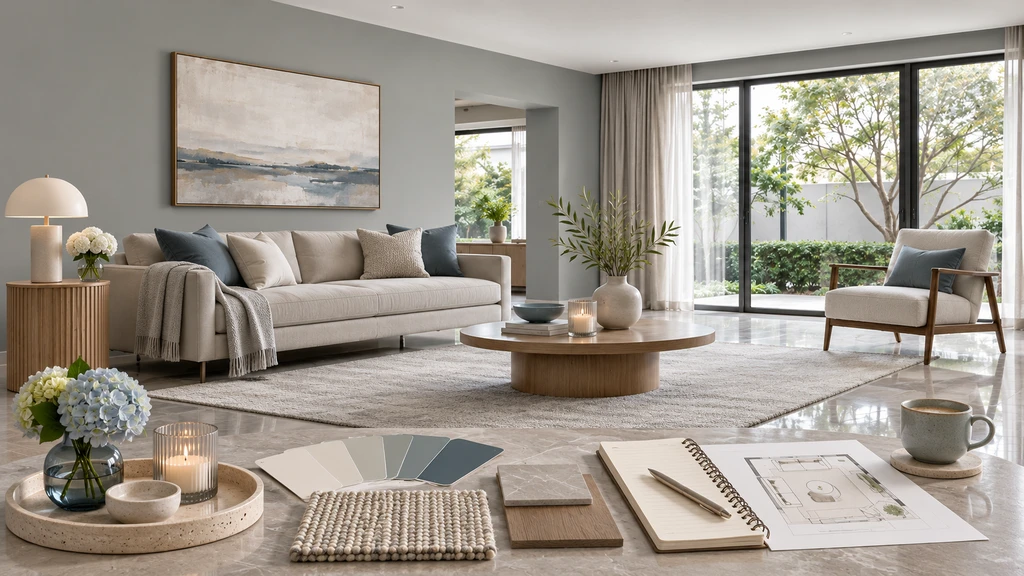
Compare color, texture, materials, and furniture layout together before making changes. Testing combinations in the context of the actual room helps identify what improves visual warmth without relying only on warmer colors.
Use REimagineHome AI to upload your living room photo and explore lighting, texture, and layout changes while keeping your existing color palette.
Example prompt: "Keep the existing colors and furniture. Add softer lighting, a textured rug, and a more inviting seating arrangement without changing the architecture."
Compare the AI design with your original room, then verify measurements, lighting, and materials before making changes.
-
10. Checklist: What to Address Before Buying Décor or Repainting
Before spending: Identify one issue, test one improvement, and check whether it solves the problem.
Frequently Asked Questions
Why does my living room feel cold even with warm colors?
Warm colors alone cannot create an inviting atmosphere. Harsh lighting, smooth surfaces, disconnected seating, or poorly scaled furniture can make a room feel visually cold.
What lighting makes a beige or brown living room feel warmer?
Warm-white lighting around 2700K–3000K can create a softer evening atmosphere. Combine ambient, task, and accent lighting while controlling brightness and glare.
Do I need a new rug or more accessories to make my living room cozy?
Not necessarily. Repositioning furniture or adding one appropriately sized textured rug may improve the room more than purchasing several decorative accessories.
Can cool-colored living rooms feel cozy?
Yes. Blue, gray, and green living rooms can feel inviting with layered lighting, tactile materials, comfortable seating, and a balanced furniture arrangement.