How to Choose the Right Dining Table Size (and Shape) for Your Space
TL;DR
If you’re unsure what size or shape dining table to pick, start with your room’s measurements and map traffic flow. Prioritize enough clearance around the table, then match table shape to the space. Leave at least 100cm between table and wall or furniture for comfort. Test options with a sheet, and pick expandable styles for small rooms.
Choosing a Dining Table: Make Every Meal Comfortable
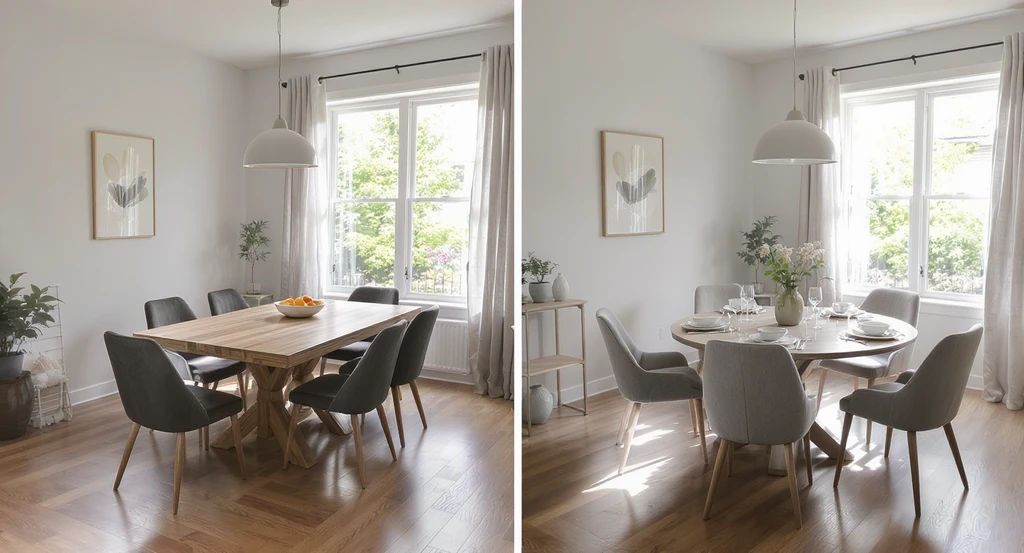
How to choose dining table size and avoid common mistakes—see how will a large table fit in a small dining room versus an ideal table size, based on real measuring and layout planning.
Feeling lost in the sea of round, rectangular, and square tables? Not sure if that beautiful table will actually fit your space—or leave everyone awkwardly squeezed together? You’re not alone. If your main question is “How to choose dining table size” or “Will a large table fit in a small dining room?”, the answer is simpler than you think: measure carefully, visualize the layout, and choose shape and features based on your lifestyle. Get it right, and your dining area becomes not just a place to eat, but a setting for connection and comfort.
-
Why Table Size—and Room to Move—Matters Most
A great-looking table is only the beginning. Dining comfortably means leaving room to push out your chair and walk by, even when every seat is filled. According to our guide on crafting the space around your dining table, this balance of comfort and movement is what creates a truly welcoming dining environment. The simple rule: always leave 100–120cm between the table’s edge and the wall, or any nearby furniture. This allows everyone to slide in, stand up, and move around without bumping into things. Measuring from furniture (not just the wall) is key for small apartments.
-
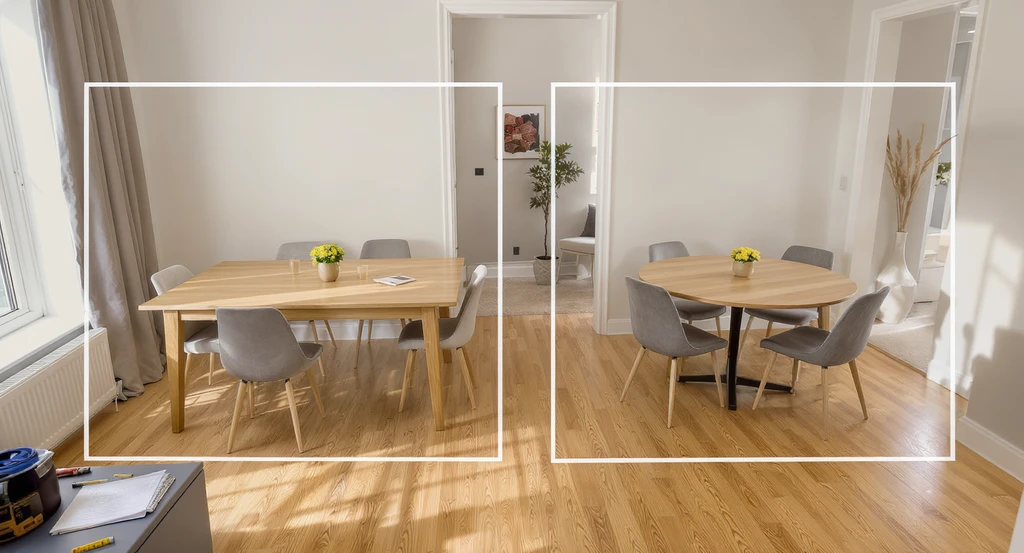
How to Check If Your Table Will Fit: The Bed Sheet Trick
Most people focus on style first, but the shape of your table has a bigger impact on comfort and how your space actually works. Here’s a simple way to think about it:
- Rectangular table: Works best in long or narrow rooms. It uses the full length of the space and is easy to extend when you have guests. Common sizes: 120cm (4 seats), 180cm (6), 210cm (8), 240–300cm (10).
- Round table: Ideal for smaller or square rooms. No sharp corners, more intimate seating, and easier to add an extra chair when needed. Typical sizes: 90–120cm (4), 150cm (6), 180cm (8).
- Square table: Fits well in square rooms and creates a cozy feel. But larger ones can make it harder to reach the center, so a lazy susan can help.
If you’re working with a smaller space, a round pedestal table usually gives you the most legroom and keeps the area feeling open. As explained in this guide to smart layouts for small apartments, matching your table shape to your room shape makes the space feel more balanced and comfortable.
-
Choosing Table Shape: Fit the Room, Not Just the Look
Most people focus on style, but the shape of your dining table affects comfort and how your space actually feels much more.
Here’s a simple way to choose:
-
Rectangular table: Works best in long or narrow rooms. It uses the room length efficiently and is easy to extend when you have guests. Typical sizes:
- 120 cm (4 seats)
- 180 cm (6 seats)
- 210 cm (8 seats)
- 240–300 cm (10 seats)
-
Round table: Ideal for smaller spaces or square rooms. No sharp corners, more intimate seating (everyone sits at an equal distance), and easier to add an extra chair when needed. Typical sizes:
- 90–120 cm (4 seats)
- 150 cm (6 seats)
- 180 cm (8 seats)
- Square table: Works well in square rooms and creates a cozy feel. But larger square tables can make it harder to reach the center, so adding a lazy Susan can help.
If you’re working with a small space, a round pedestal table usually gives you the most legroom and makes the area feel more open.
As explained in our guide to smart layouts for small apartments, matching your table shape to your room shape keeps the space balanced and comfortable.
-
Rectangular table: Works best in long or narrow rooms. It uses the room length efficiently and is easy to extend when you have guests. Typical sizes:
-
How Many Can Sit? Avoid the Elbow Bump
It’s tempting to fit in more seats, but nobody loves bumping elbows during dinner. As a basic rule, allow about 60cm of table edge per person. That gives adults enough personal space for eating, even if you occasionally squeeze in an extra chair or two for parties. Manufacturers often suggest optimal seating for each table size. If in doubt, check their recommendations and compare with your own needs. For expandable tables, consider daily use versus occasional gatherings — if you rarely host groups, a compact table with leaves might serve you best.
-
Common Mistakes When Buying a Dining Table
- Ignoring room-to-table clearance: People often choose a table that looks great but leaves no space for chairs to move, making mealtimes awkward.
- Buying too big or too small: Large tables in small rooms overpower the space and block movement, while tiny tables can feel lost and underused in large rooms.
- Prioritizing looks over lifestyle: Don’t buy the trendiest design if it won’t survive family life or regular entertaining.
- Not testing with actual measurements: Eyeballing or guessing size leads to costly mistakes—always measure or use the sheet trick first.
- Forgetting about doorways and access: If you can’t get the table (and chairs) in or out easily, frustration awaits.
-
Simple Decision Guide: The Table That Suits You
- If you entertain often and have the room: Go for a larger, rectangular or oval table, or a square with leaves for flexibility.
- If your dining zone is small or shared (like many apartments): A round or compact rectangular table—with an extendable option for guests—makes the most sense.
- If seating numbers change: Look for folding sides, benches (which tuck under), or removable leaves for maximum flexibility.
- If your goal is daily comfort: Measure for at least 100cm clearance around the table, and choose durability over trend.
-
Layering in Style and Comfort
Once your table fits the space, don’t forget the details that make the area feel finished and welcoming—like a right-sized rug, good lighting (a chandelier and layered wall lighting work wonders), and art or plants nearby. These extras help define the dining zone and add warmth, as noted in our tips on decorating around your dining table.
FAQs on Selecting a Dining Table Size
- How do I know if a large table will fit in my small dining room?
- Measure the room and leave at least 100–120cm around all sides of the table (including chairs). Use a bed sheet folded to the table’s dimensions for a real-world test before buying.
- What’s the best dining table shape for small spaces?
- Round or oval tables are ideal; they take up less space and eliminate sharp corners, offering easier movement and extra flexibility for guest seating.
- What are common mistakes when buying a dining table?
- Not measuring clearance, buying too big/small, prioritizing looks over everyday comfort, and ignoring door or hallway access are all classic errors.
- How much space per person do I need at the table?
- Around 60cm per person is a good rule—it’s enough space for comfortable eating without feeling crowded.
- Can a bench work at a dining table in a small space?
- Yes! Benches slide under the table when not in use and can make a dining area feel less cramped, as outlined in our guides on dining layouts.
Key Takeaways: Your Best Table, Your Best Meals
Choosing the right dining table size is mostly about thoughtful measurement and understanding your real needs. Prioritize space to move around, pick shapes that suit your room, and don’t sacrifice daily comfort for one-off entertaining. Visual tests (with sheets or digital room planners) and keeping 100–120cm of clearance are your best friends. When the fit is right, everything else—from dinners to daily life—flows better.