Does a Larger Sofa Steal Space or Add Real Comfort?
TL;DR
A larger sofa earns its floor space when it adds useful seating or lounging room without compromising everyday movement and access. Compare the complete arrangement, not just sofa length. A bigger sofa can replace an armchair and reduce the combined furniture footprint while still narrowing an important passage. Explore the alternatives in 3D, then verify dimensions and comfort in person.
-
1. What Should a Larger Sofa Actually Improve?
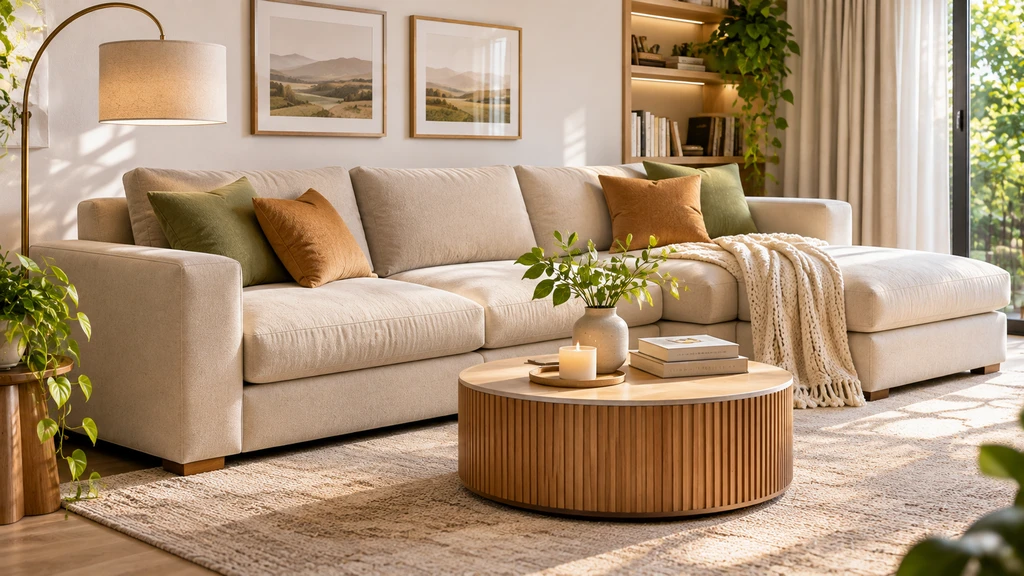
A larger sofa can add real lounging and seating comfort, but its deeper footprint should still leave enough space for circulation, tables, and everyday access.
Before choosing a bigger sofa, name the problem it should solve: an extra person needs a seat, two people want to stretch out, or a separate armchair interrupts the arrangement. More exterior width is not the same as more usable seating. Compare the space between the arms and the usable seat depth, rather than relying only on overall dimensions or a “three-seater” label.
- For more people: Check whether the usable seating area accommodates the people who regularly sit together.
- For lounging: Check the usable length and depth where someone will stretch out, not just the sofa’s longest exterior measurement.
- For replacing an armchair: Decide whether losing a separate reading or conversation seat is an acceptable trade-off.
-
2. How Much Extra Floor Space Does the Bigger Sofa Take?
For a rectangular sofa, estimate its floor footprint by multiplying overall width by overall depth. The hypothetical example below assumes both sofa backs stay on the same line, with an opposite cabinet front 190 cm ahead. Nothing else occupies the measured gap.
Measurement Current sofa Larger sofa Overall width 220 cm 260 cm Overall depth 90 cm 105 cm Rectangular footprint 1.98 m² 2.73 m² Gap between sofa front and cabinet 100 cm 85 cm The larger sofa occupies 0.75 m² more floor space, approximately 38% more, and reduces the front gap by 15 cm. These are calculated differences, not measurements generated by Chez or recommended walkway widths. For an L-shaped sectional, add its non-overlapping sections rather than counting the empty inside corner as occupied furniture area.
-
3. Can a Bigger Sofa Reduce the Total Furniture Footprint?
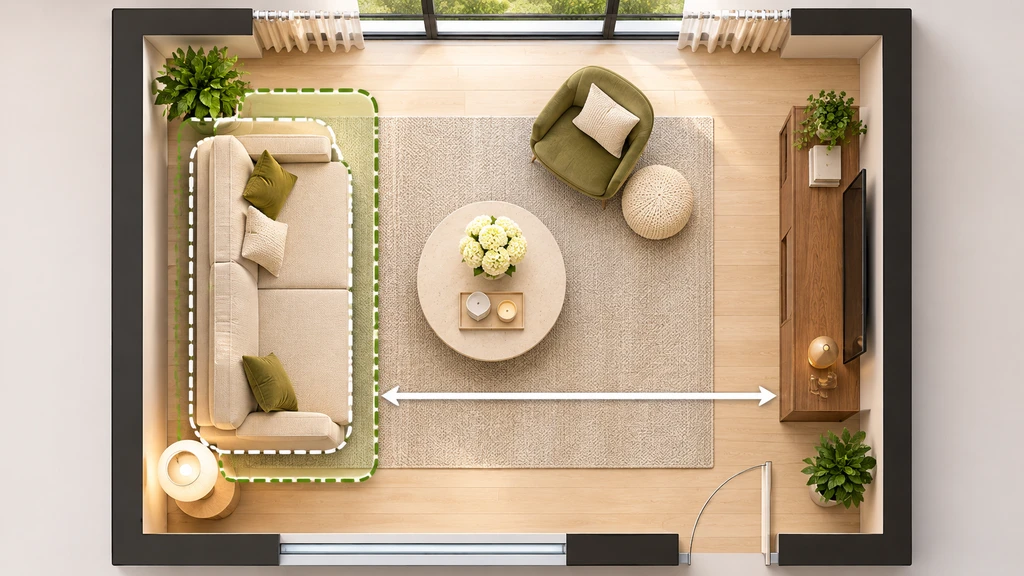
Compare sofa footprints from above to see how extra width and depth affect the narrowest clearance, furniture relationships, and overall circulation before upsizing.
Yes, depending on what it replaces. Suppose the current sofa sits alongside a 90 × 90 cm armchair. Together, they occupy 1.98 + 0.81 = 2.79 m². Replacing both with the larger sofa reduces their combined footprint to 2.73 m², a small saving of 0.06 m². This comparison excludes other furniture, which remains unchanged.
However, the gap in front of the sofa still falls from 100 cm to 85 cm. Removing the chair might open another part of the room, but it does not restore that front passage. Less total furniture area does not necessarily mean better circulation. Nor does the calculation prove that the larger sofa provides equivalent seating or preserves the chair’s separate function.
-
4. How Can 3D Room Exploration Help You Compare?
Chez by ReimagineHome turns room photographs into an explorable 3D space with a floor plan, wall elevations and preset catalogue furniture. Upload at least two clear photographs of the same room; four to eight overlapping views are recommended. Include doors, windows, built-ins, and some floor and ceiling.
Use catalogue pieces as visual stand-ins, not proof that a particular retail sofa fits. Compare screenshots from consistent viewpoints, changing only the sofa first. Then test the arrangement without the armchair. Keep any differences between the catalogue model and your shortlisted sofa recorded separately, as explained in our guide to testing furniture layouts before moving anything.
View Question to investigate Floor plan Where does the larger footprint narrow a route, and where does removing another piece release space? Entrance view Does the sofa interrupt the approach to the seating area or dominate the view into the room? Primary-use view How do television sightlines, conversation positions and access to tables change? Wall elevation How does the sofa’s height and width relate to windows, artwork and nearby storage? -
5. What Still Needs Checking in the Real Room?

Review the full room, not just the sofa: a larger sectional can add comfort, but it should still preserve clear routes, useful seating relationships, and access to the TV and balcony.
A preview helps you investigate the arrangement; a floor outline helps you test its footprint. Neither confirms cushion firmness, back support or personal sitting comfort. Use the proposed sofa’s actual specifications and, where practical, try it in person. ReimagineHome’s layout-testing guide also recommends checking furniture in use, storage access and the route into its proposed position.
- Mark the footprint: Use a surface-safe method and test any tape discreetly first. Walk around the outline without stepping through it.
- Check everyday access: Open doors and drawers, test the narrowest route, and account for people’s feet and the movement needs of everyone using the room.
- Check moving furniture and delivery: Include recliner or sofa-bed operating space, follow product instructions, and check doorways, stairs, lifts and tight turns separately.
- Test each seating position: Check sitting, standing, television viewing and access to a stable surface. A longer sofa may require reconsidering table placement; our coffee-table guide explains how to assess each seat.
-
6. Should You Upsize, Adjust the Choice or Keep the Current Sofa?
Judge the options against the original problem, rather than choosing whichever arrangement looks most impressive in a preview.
Decision When it makes sense Choose the larger sofa The additional usable seating or lounging space solves a real need, and essential routes and access remain workable. Adjust the choice The extra width helps, but the depth, chaise position or arm dimensions create a conflict. Compare a different configuration or footprint. Keep the current sofa The upgrade adds little usable comfort, removes a valued separate seat, or creates a circulation problem that remains unresolved. Record any unresolved question before ordering. “The cabinet cannot open fully” or “the catalogue model is shallower than the shortlisted sofa” is more useful than simply deciding that a layout looks spacious.
Frequently Asked Questions
Can a larger sofa work in a small living room?
Yes, if the complete arrangement—including walking paths and access—still works well. Sometimes, a big sofa can actually reduce the overall furniture area if it replaces other pieces. Measure passages and preview the full setup before you decide. See our guide to sofa sizing for small spaces for more tips.
Will a 3D preview guarantee the perfect fit for my new sofa?
No tool is a substitute for measuring, but a 3D preview helps you spot space and arrangement issues early. Always verify product specifications and your own room measurements before buying.
What is the most common mistake people make when upsizing their sofa?
People often ignore total footprint and the way a larger sofa affects walkways, doors, and storage access. Look beyond length and check every route and functional area in your living room.
Takeaway: Choose Useful Comfort, Not Size Alone
A larger sofa is worthwhile when its extra usable space improves daily life without creating a more important problem elsewhere. Compare the full arrangement, check the narrowest route, and test comfort separately from appearance.