How to Choose the Right Curtain Length for Every Room
TL;DR
Curtain length directly affects a room’s style, light management, and everyday usability. Accurately measure from rod to floor, consider room function, and choose from sill, apron, floor, or puddle lengths for both practical and visual balance. Visualization and structured assessment can prevent common errors and maximize both aesthetics and utility.
Why Curtain Length Matters in Home Design Decisions
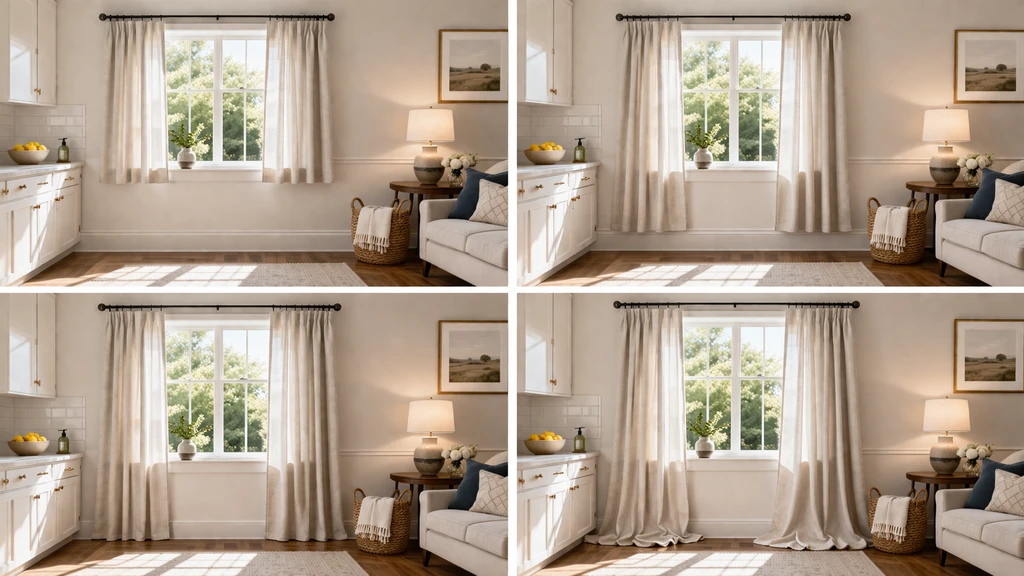
How to choose curtain length for every room: Accurately measuring curtains to fit living room windows, selecting standard curtain sizes for awkward window layouts, and determining the best curtain length for small bedrooms, all while avoiding common curtain measurement mistakes.
Choosing the correct curtain length matters for more than visual appeal it drives room comfort, privacy, traffic flow, and even future resale value. The process can feel overwhelming due to variations in window sizes, ceiling heights, and lifestyle needs. Still, a structured approach can transform uncertainty into decision confidence, especially with the support of measurement guidance, product visualization, and AI-based preview capabilities.
This guide will define the effects of each curtain length, explain measurement best practices, and clarify how curtain length choices should adapt across different rooms. We’ll also draw on expert advice from our references to prevent common mistakes and ensure a tailored fit for your living environment.
-
What Is Actually Happening When You Choose Curtain Length
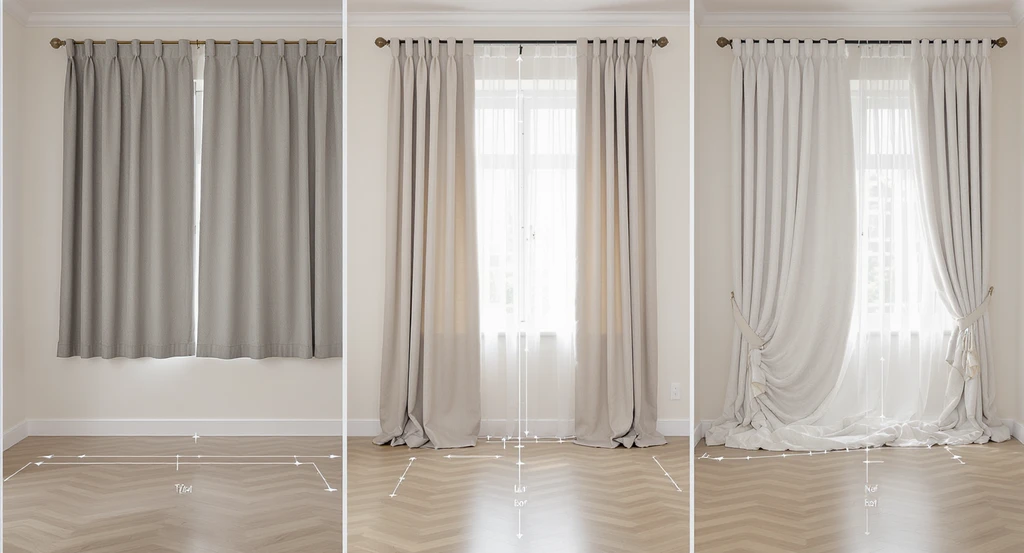
Compare visual outcomes of different curtain lengths in a living room to master how to choose curtain length for every room and avoid common curtain measurement mistakes.
Choosing curtain length is about aligning window dressings with practical needs and spatial proportions. A curtain that is too short appears unfinished, while one that puddles too much may collect dust or impede movement. The right length frames the window, balances your room’s scale, and avoids visual disruption along the wall-to-floor transition. This precise relationship, when visually validated in your actual space, is central to the overall design harmony and user satisfaction.
-
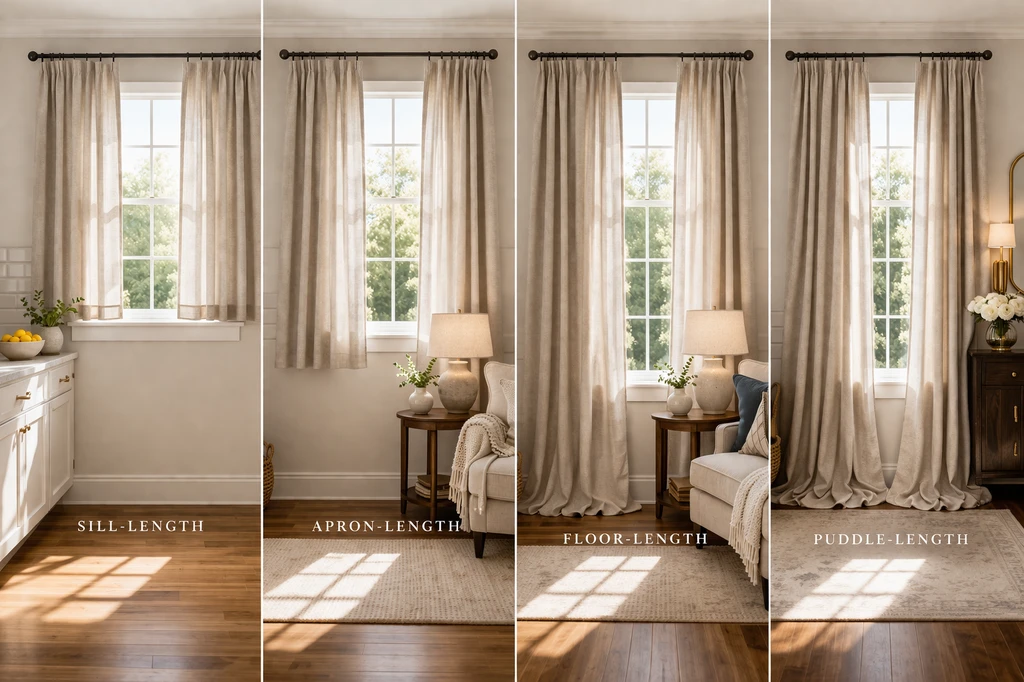
Standard Curtain Length Options and Their Impact
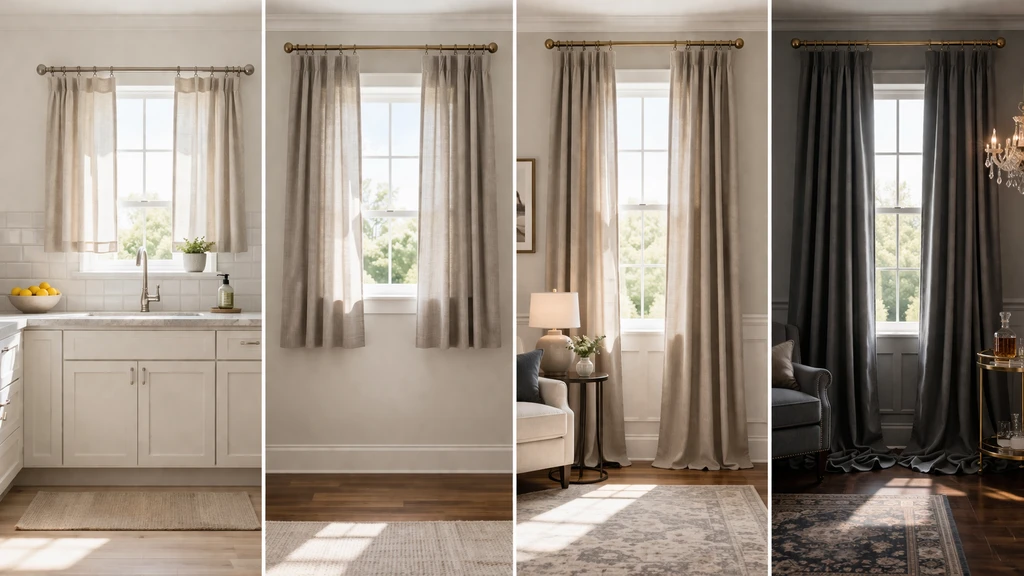
Accurately selecting from standard curtain length options—sill, apron, floor, and puddle—helps you choose curtain length for every room, find the best curtain length for small bedrooms, and avoid common curtain measurement mistakes.
Most curtain panels are available in standardized lengths—63, 84, 96, or 108 inches each serving specific spatial needs:
- Sill-length: Sits just at or slightly below the window sill, best for kitchens, bathrooms, or compact rooms.
- Apron-length: Extends a few inches below the sill for a slightly fuller look.
- Floor-length: Reaches the floor, offering balanced elegance ideal for living rooms, bedrooms, and dining areas.
- Puddle-length: Rests several inches onto the floor, adding visual drama for formal or low-traffic areas.
According to our guide on choosing the perfect curtains for living rooms, floor-length and puddle-length curtains can dramatically influence the sense of height and grandeur in a space.
-
Curtain Length by Room: Use Case Scenarios
- Living Room: Floor-length or modest puddle-length styles for formality and visual height.
- Bedroom: Floor-length with blackout linings for light control and privacy.
- Kitchen: Sill or apron-length designs for practicality, light access, and easy cleaning. For more detail, see our structured guide on kitchen curtains.
- Bathroom: Sill or apron-length for privacy, moisture avoidance, and ventilation.
- Dining Room: Floor or puddle-length to evoke formality and frame the window elegantly.
- Home Office: Floor-length for professionalism, or sill-length when maximal surface access is needed.
-
The REimagineHome AI Curtain Length Evaluation System
The Curtain Length Evaluation System focuses on three checkpoints: Functional Fit, Visual Logic, and Space-User Flow (FVS).
- Functional Fit: Does the length allow window or floor access, and accommodate cleaning and movement?
- Visual Logic: Does the curtain visually anchor the window and enhance perceived ceiling height, as explored in our analysis of curtain selection mistakes?
- Space-User Flow: Do occupants need to walk near or under the window, and does the fabric intrude on this path?
This method aligns both aesthetic and practical priorities, combining traditional measurement with spatial reasoning and future-facing visualization.
-
Common Measurement Mistakes and Their Consequences
Frequent pitfalls include ignoring the height of the rod, misunderstanding header style, and failing to account for shrinkage or fabric pooling. Curtains hung too short diminish perceived window size, while excessively long panels are prone to tripping hazards and excessive wear. For an in-depth breakdown, refer to our guidance on AI visualization for curtain selection.
-
When Long Curtains Work Well-And When They Don’t
Long curtains suit most living, dining, and bedroom scenarios especially with high ceilings. They create a sense of vertical stretch, lending rooms a grand, finished appearance. However, for kitchens or small bathrooms, long curtains can hinder traffic, absorb odors, or get wet. In these spaces, short or even custom curtain solutions often yield better results. As we explored in our living room curtain guide, the right length depends on layout, light access, and real use-case flow.
-
Avoiding Light Leakage and Functional Gaps
Improper length can leave vertical gaps at the top, sides, or bottom of the curtain. For total darkness-especially in bedrooms extend the rod and curtain generously beyond the window frame, and consider blackout liners. Our light-leak guide explains why rod placement and curtain fullness play a vital role in minimizing unwanted light seepage.
-
Budget Sensitivity and Customization Considerations
Standard curtain panels often meet average needs, but uniquely sized windows or personalized style demands may require custom lengths. While custom options are costlier, they eliminate awkward gaps and match your space precisely. Budget-conscious buyers should prioritize standard sizes for main rooms and custom orders for feature windows or where true blackout, insulation, or scale matching is crucial.
-
Definition: Curtain Lengths and Their Effects
Curtain length refers to the drop from the hanging rod to the curtain’s lower edge. The impact is both visual and functional: sill-length curtains suit utility spaces, floor-length options balance formality and practicality, and puddle-length styles evoke luxury but require careful planning. Most people believe curtain length is only aesthetic, but it actively determines light filtering, privacy, spatial perception, and safety in daily use.
-
How Visualization Reduces Curtain-Length Uncertainty
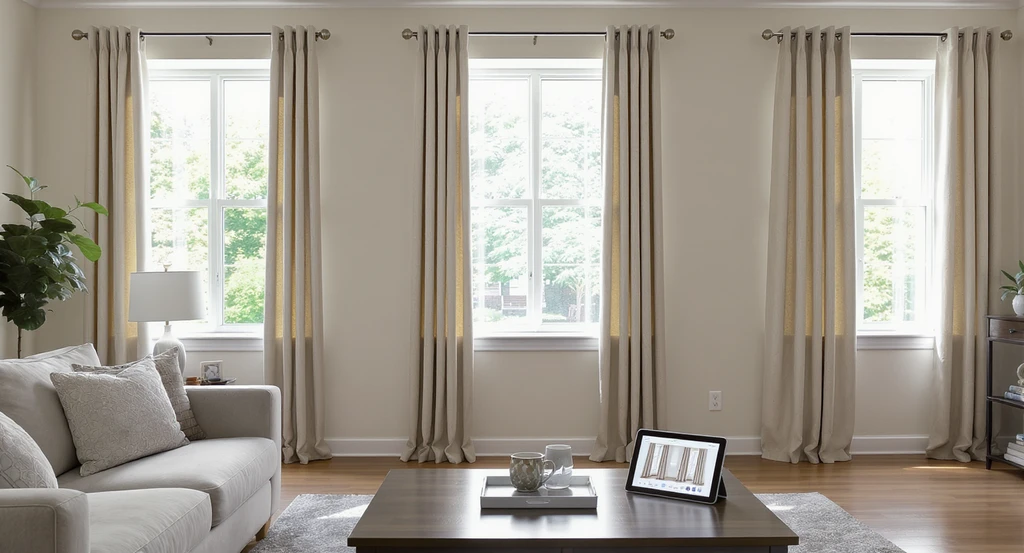
Visualization technology lets homeowners compare standard curtain sizes on real living room windows, helping you choose the best curtain length for every room and avoid common measurement mistakes.
Before visualization, homeowners often struggle to imagine how varied curtain lengths will look and function in their real rooms. Visualization technology especially from platforms like REimagineHome AI—lets you preview different lengths, headers, and mountings against your actual windows, so decisions are grounded in reality. This process reduces decision regret, clarifies proportions instantly, and shortcuts trial-and-error purchasing cycles. Learn more about using AI visualization to prevent selection mistakes.
-
Step-by-Step Curtain Length Evaluation
- Measure from the rod to the desired endpoint sill, apron, floor, or puddle.
- Calculate header style and hem allowances.
- Preview options using visualization tools before purchase.
- Factor in furniture, window height, and expected traffic flow.
- Avoid both overdressing (trip hazards) and underdressing (unfinished look).
-
Conclusion: The Lasting Impact of the Right Curtain Length
Choosing the correct curtain length transforms not just window appearance but overall room usability and value. Using structured evaluation, visualization, and practical guidance backed by expert resources—you can achieve decision confidence and avoid costly mistakes. The right curtain length enables rooms that look intentional, function beautifully, and appeal to both current users and future buyers.
For further structured advice, see our step-by-step curtain selection guide.
Visualization Scenario
Picture standing in your living room, uncertain whether floor-length or puddle-length curtains will heighten the space or look fussy. With an AI visualization, you preview both—seeing how each length interacts with furniture and light. Instantly, your confidence grows: proportions look correct, light is managed, and the final look is seamless—no costly errors, just assured results.
Frequently Asked Questions About Curtain Length
FAQ Preview
What curtain length is best for living rooms?
Floor-length curtains work best for living rooms, adding elegance and helping to visually raise ceiling height. Puddle-length curtains add extra drama where formal style is desired. Learn more in our living room curtain guide.
Should curtains always touch the floor?
No. While floor-length is standard for many spaces, sill or apron lengths work better in kitchens and bathrooms for practical reasons such as cleaning and moisture avoidance.
How can I prevent light gaps around curtains?
Extend the curtain rod well beyond the window width and use wider, fuller panels. Blackout linings and curved or wraparound rods also help. See our full guide on preventing light leakage.
What’s the biggest mistake when choosing curtain length?
The most common error is choosing panels that are too short, making the window and room look smaller or unfinished. Always measure carefully and account for rod placement and header style.