Transforming a Blank Living Room Wall: Art and Built-In Fireplace Staging on a Real Budget
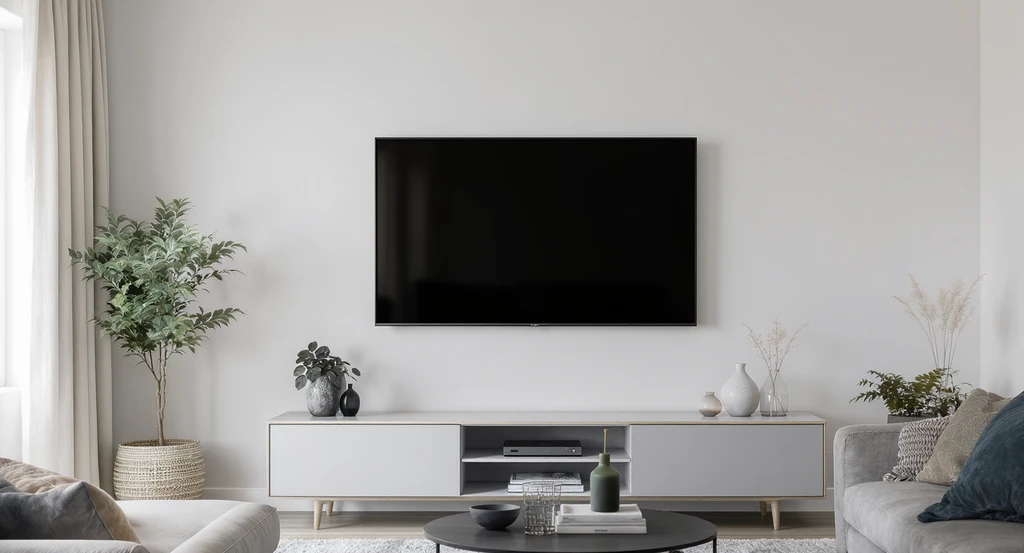
Starting with an Awkward Blank Wall
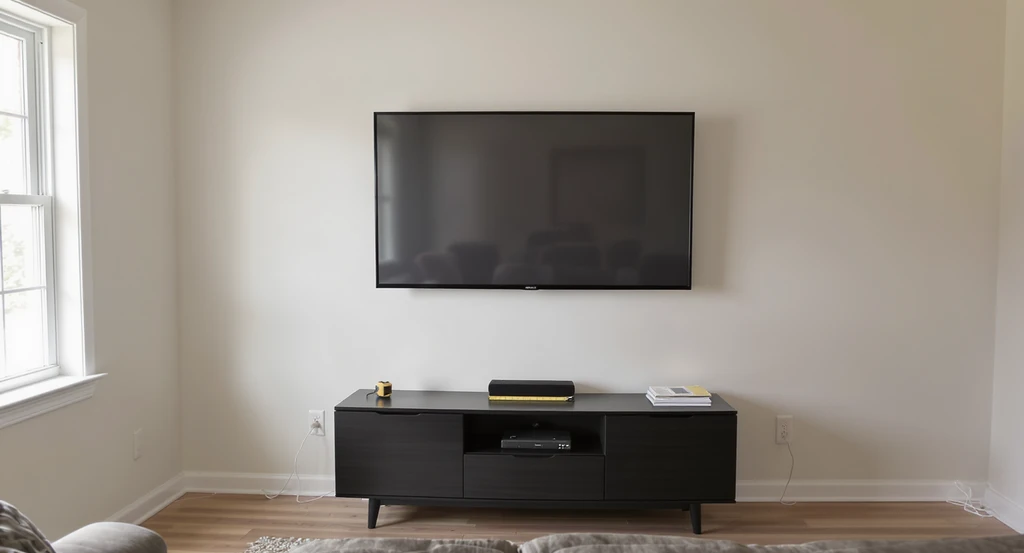
A typical empty living room wall before transformation, illustrating creative ways to furnish an empty living room and plan a fireplace feature wall on a real budget.
Staging an empty living room wall for both style and function can be daunting—especially when architectural features are limited, and every choice needs to serve a purpose. In this case study, we examine how a typical living room underwent a step-by-step transformation: starting with a dark TV hung on a blank wall, evolving through multiple layout experiments, and culminating in a welcoming feature wall with art, a custom fireplace, floating shelves, and dual cabinets—all within a moderate, carefully managed budget. The dominant question driving this project was straightforward: "What are creative ways to furnish an empty living room wall, especially if you want to add both visual interest and function without overwhelming the space or the budget?" The solution in this case hinged on a staged sequence: first, swapping out the television for a large-scale landscape artwork; then integrating a custom fireplace feature, and finally adding flanking cabinets and floating shelves for storage and style. Early budget-savers included repurposing existing cabinetry finishes and focusing decorative purchases on just a handful of statement-making elements.
-
Art Replaces TV, Storage and Shelving Frame the Fireplace
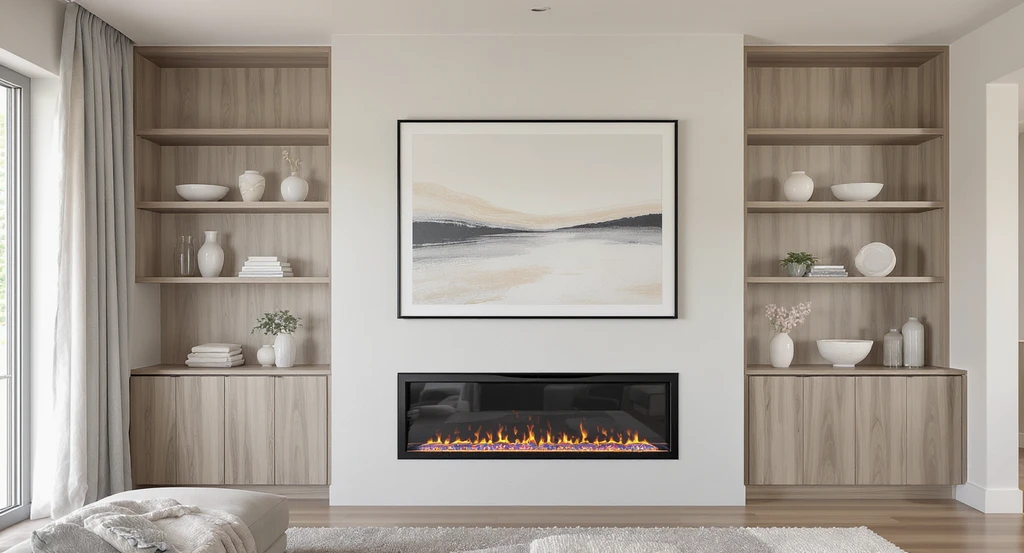
A living room wall transformed by a landscape art piece in place of a TV, framed by floating shelves and storage cabinets that maximize function and style. This setup showcases creative ways to choose wall art for large spaces and design a fireplace feature wall that anchors the room without overcrowding, highlighting how to use symmetry and purposeful storage for a balanced, curated look.
The single most impactful move was to replace the wall-mounted TV with a landscape art piece of exactly the same size and shape. This kept the visual proportions balanced while instantly upgrading the room’s feel—from technological to personal and curated. According to our editor guide on hanging art above a sofa, keeping art at eye level and properly scaled to the furnishing beneath (in this case, the new fireplace feature) helps anchor a room and avoid the "floating" look that plagues many under-decorated walls. By reserving most of the budget for the central art, fireplace, and storage flanking the feature area, the team avoided costly, piecemeal spending on small, trendy décor. Instead, the design uses intentional negative space and symmetry—a move supported by advice in our analysis of fireplace wall art options. Floating shelves and twin storage cabinets were customized to the room proportions but restrained in finish and hardware, maximizing spatial clarity on a reasonable budget.
Expert Insight
A homeowner once struggled to visualize the difference between mounting a TV or a painting above a new fireplace. Uploading a photo to a virtual design platform revealed instantly that the art softened the entire room, justifying the swap and helping choose shelving placement, all before any holes were drilled.
-
Existing Room: Architectural Constraints and Early Observations
This particular living room’s challenge was its blank, slightly recessed wall—a common problem in builder-grade homes that lack moulding or focal points. The flooring’s grayish-wood tone established an immediately visible palette, while the overall proportions invited a solution that would feel both tailored and unforced. Notable features included:
- Uninterrupted wall surface with no trim or built-ins initially
- Floating shelves and cabinets later added on each side of the proposed fireplace area
- Muted wall color (eventually updated to light beige), matching new cabinetry for a coherent envelope
- Flooring informally dictating the wood tone for all new shelving and mantels
-
Why Art and a Custom Fireplace Feature Work for This Space
One key guideline emerged during design iteration: any large wall in a living room is best addressed with a clear, visually anchored focal point, ideally using scale-appropriate art or a fireplace feature. In this case, sizing the artwork to precisely match the replaced TV provided a no-guesswork focal area, eliminating awkward gaps and making the most of the wall’s horizontal spread. Raising the fireplace insert off the floor (rather than letting it sprawl to baseboard level) established a natural central zone, echoing tips from our visual guide for TV and fireplace layout. Flanking the fireplace with floating wood shelves—shortened slightly so they didn’t butt against either wall—introduced storage without a boxed-in feel, answering the age-old question of how to style a long, awkward expanse (a topic echoed in our living room finishing guide).
-
Budget Decisions: Anchoring Spend on Art and Built-Ins
Budgeting played a defining role in this makeover. Instead of spreading funds thinly over too many elements, investment focused on three anchor zones: the statement art, fireplace insert with custom surround, and purpose-built storage cabinets below fine-scale floating shelves. There were several cost-conscious decisions unique to this project:
- Using the same light wood species for shelves/mantel and flooring, reducing sourcing costs and visual noise
- Painting both new cabinets and walls in the same shade to avoid buying extra trim or finishes
- Keeping all architectural changes (fireplace, built-ins, shelving) on one wall, so other zones stayed largely untouched and within budget constraints
-
Product Choices: Art, Floating Shelves, and Fireplace Details
Every product choice was dictated by both aesthetics and cost. The framed art—sized exactly to match the original TV—became the main visual anchor, selected for a palette that supported the room’s muted tones. Below, a streamlined fireplace insert with a subtle gray tile border delivered function and architectural weight without competing for attention. Flanking floating shelves were custom-finished in pale wood and deliberately made shorter than the wall’s full width, keeping the room feeling light and modern. Tall white base cabinets mirrored the wall color, blending in seamlessly and providing closed storage for electronics, books, or games. Small details, like a vintage-style phonograph and slender candlesticks, brought personality and varied height to the shelves and mantel. For similar art, shelving, or insert options, resources like West Elm and Wayfair offer a range of neutral, real-wood pieces and affordable electric fireplace units that echo this setup. Always confirm finish samples and measure shelf length and spacing before ordering online to avoid mismatch or crowding. (Note: No direct product links included as per rules.)
Visualization Scenario
Picture walking into a living room where the once-blank wall is now perfectly balanced—a glowing fireplace insert is framed by two floating wooden shelves per side, base cabinets blend into freshly painted walls, and a soft, moody landscape painting catches your eye at just the right height. Minimalist but warm, the feature wall pulls the space together, all arranged for comfort, storage, and effortless flow.
Living Room Wall Staging FAQ
Select art that matches the width of your anchor furniture and hang it at eye level. It’s wise to choose a palette that works with your existing decor, ensuring the piece feels integrated rather than tacked on. More guidance can be found in our sofa art hanging guide.
How much storage is too much for a feature wall?
Use closed base cabinets for essential storage but keep upper shelving open and floating. Too many tall cabinets can visually overwhelm an average living room. Shelves should not extend wall-to-wall; leaving several inches of breathing room on each side keeps the composition light and modern.
Can I use a fireplace and art together on the same wall?
Absolutely—just balance the elements so neither one feels jammed or ad hoc. In this project, raising the fireplace and placing art directly above gave each a natural zone and avoided visual stacking. See our discussion of practical layout options here.
How can I avoid making my living room feel crowded with built-ins?
Keep shelving floating, not floor-bound, and always leave space between shelves and adjacent walls or fireplace edges. Shortening shelf runs and limiting upper shelves to two per side is often enough for most rooms.
What’s the smartest staging upgrade for a blank wall on a limited budget?
Focus the budget on one large artwork and a simple, attractive fireplace insert; flanking these with open, light-wood shelving adds interest without the price tag of a true built-in bookcase setup. If possible, paint new cabinets and shelves to match walls for a seamless envelope.
Balance, Function, and Visual Ease on a Moderate Budget
For anyone struggling with how to transform an empty living room wall, this case study demonstrates the payoff of choosing a centralized art and fireplace feature, framed by purpose-built shelving and subtle cabinetry. By refining shelf length, picking a correctly sized landscape artwork, and matching finishes across cabinetry and flooring, the space feels composed without feeling crowded or off-balance. Previewing each stage visually was critical, and using platforms like REimagineHome AI allowed for quick trials of different options, reducing costly mistakes and returns. The key takeaways: anchor your spend on a few impactful pieces, opt for floating shelves and built-ins that work with (not against) your room’s proportions, and use art that ties the scheme together both in size and palette. This approach ensured the room was not only beautiful and functional, but also delivered within a realistic budget.